

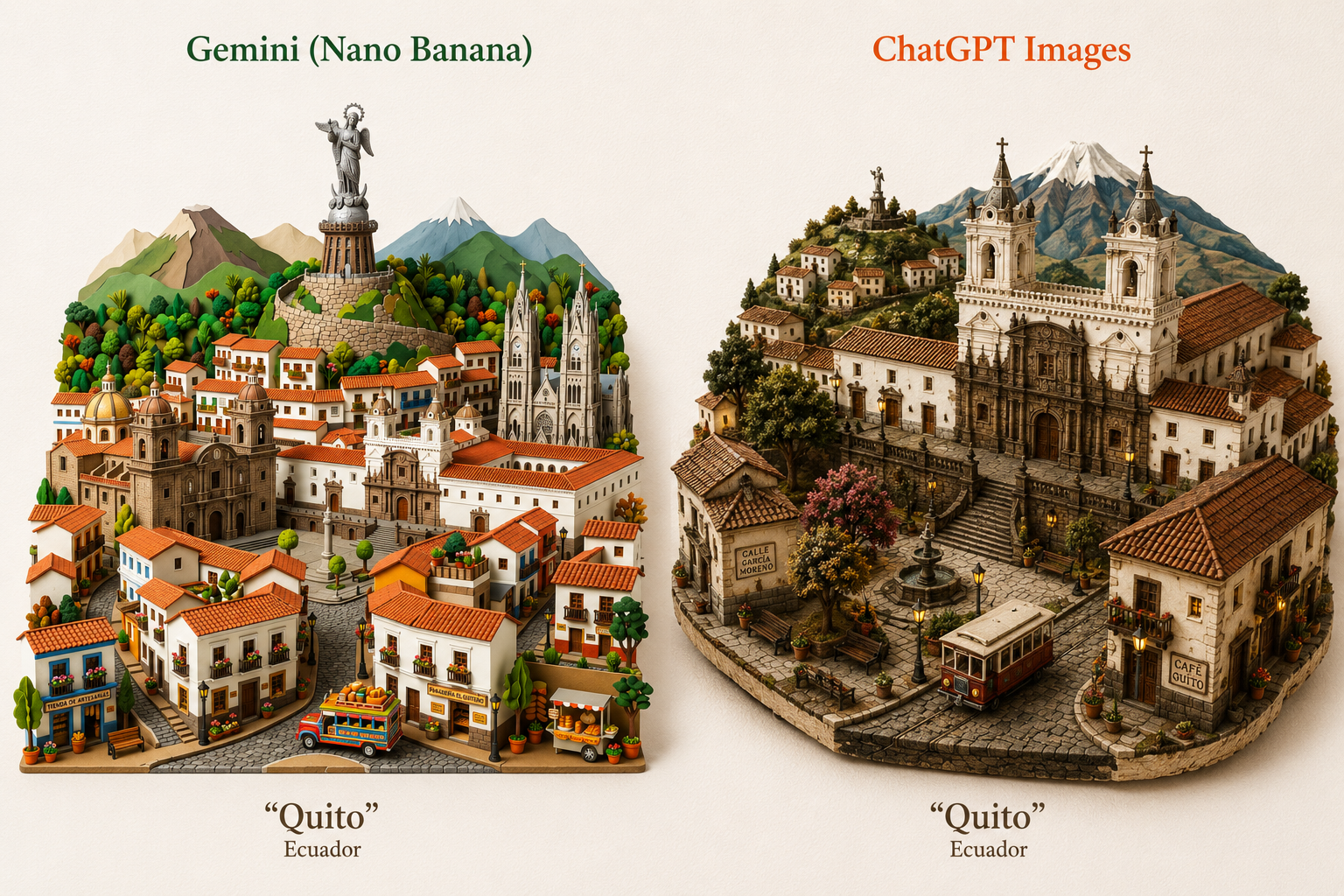
Esta vez quise experimentar con una idea diferente: transformar una ciudad completa en un pequeño diorama artesanal, como si hubiera sido construido a mano con papel, cartón, arcilla, madera pintada y materiales de maqueta.
Y Quito tiene muchísimo material para jugar con este concepto.
La arquitectura del Centro Histórico, las calles empedradas, las fachadas coloniales, las iglesias, los tejados, las plazas, la vegetación andina y, por supuesto, las montañas que rodean la ciudad hacen que su identidad visual sea inmediatamente reconocible.
La clave del ejercicio no era simplemente pedirle a la IA que pusiera varios monumentos juntos.
El prompt busca primero identificar qué hace visualmente reconocible a una ciudad, seleccionar un elemento protagonista y después construir alrededor de él un pequeño mundo coherente, incorporando arquitectura, geografía, vegetación y detalles cotidianos.
Además, quise alejar el resultado del típico render 3D perfecto. La intención fue que se sintieran los materiales, las pequeñas imperfecciones y ese aspecto de maqueta hecha a mano.
Este fue el prompt que utilicé 👇
━━━━━━━━━━━━━━━━━━
PROMPT
Create a whimsical handcrafted miniature diorama of [CITY, COUNTRY].
First, identify the city’s most recognizable visual identity: its iconic architecture, landmarks, urban character, geography, vegetation, colors, cultural details, and small everyday elements that make the location immediately recognizable.
Select one iconic landmark or architectural feature as the main focal point, then build a cohesive miniature world around it using 4–7 additional location-specific elements. Arrange them naturally rather than as a random collection of landmarks.
Include miniature streets, sidewalks, trees, flowers, street lamps, benches, small shops, local architectural details, signage, vegetation, and subtle objects associated with the city. When relevant, incorporate distinctive geographic features such as mountains, hills, coastline, rivers, bridges, or surrounding landscape.
Everything must feel physically miniature and lovingly handcrafted, as if it were a premium collectible model built from paper, clay, painted wood, cardboard, and tiny architectural-model materials.
Use realistic handmade textures, visible craftsmanship, tiny imperfections, layered paper edges, clay-like surfaces, miniature foliage, and delicate handcrafted details. Avoid glossy CGI or plastic-looking surfaces.
Use a soft, warm and slightly muted color palette inspired by the real location.
Place the complete diorama against a clean, warm-white textured paper background with generous negative space. The miniature should feel like a self-contained tiny world resting naturally on the page.
Add small, elegant typography with only:
“[CITY]”
“[COUNTRY]”
Optionally include a few tiny, subtle location-inspired signs integrated naturally into the miniature.
Composition: high-angle three-quarter view, similar to looking down at a premium architectural scale model. Clear visual hierarchy with the main landmark immediately recognizable and smaller details rewarding closer inspection.
Lighting: soft diffused studio lighting, gentle realistic shadows, subtle ambient occlusion, warm highlights and a cozy storybook atmosphere.
Style: whimsical handcrafted miniature art, architectural model, paper craft, clay details, premium collectible diorama, highly detailed, charming but sophisticated.
No people.
No photorealistic full-size environment.
No generic skyline.
No unrelated landmarks.
No excessive text.
No floating objects.
No futuristic elements unless they genuinely belong to the location.
Vertical 4:5 composition.
━━━━━━━━━━━━━━━━━━
Para utilizarlo con cualquier otra ciudad, simplemente cambia [CITY, COUNTRY] y deja que el modelo interprete cuáles son los elementos que mejor representan visualmente ese lugar.
Creo que ahí está la parte más interesante: no pedir únicamente una imagen bonita, sino darle suficiente contexto para que primero interprete la identidad del lugar y después la convierta en una composición visual.
¿Con qué ciudad probarían este prompt? 🌎